
Installation and configuring plug-in Tracking Code Manager
The plugin adds the tracking codes of Facebook Pixel, Google Tag Manager, Google Ads, TikTok, Pinterest and other services to the pages of your store, or any script of your own. You don't need to change the theme files.
It's easy to configure the plugin. See pictures.
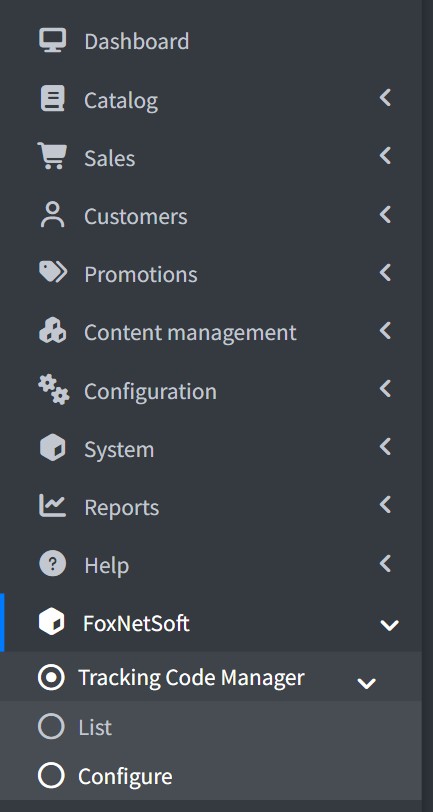
1. Open 'FoxNetSoft' - 'Tracking Code Manager' in the admin menu.
'List' is the list of your tracking codes. 'Configure' is the plugin settings.
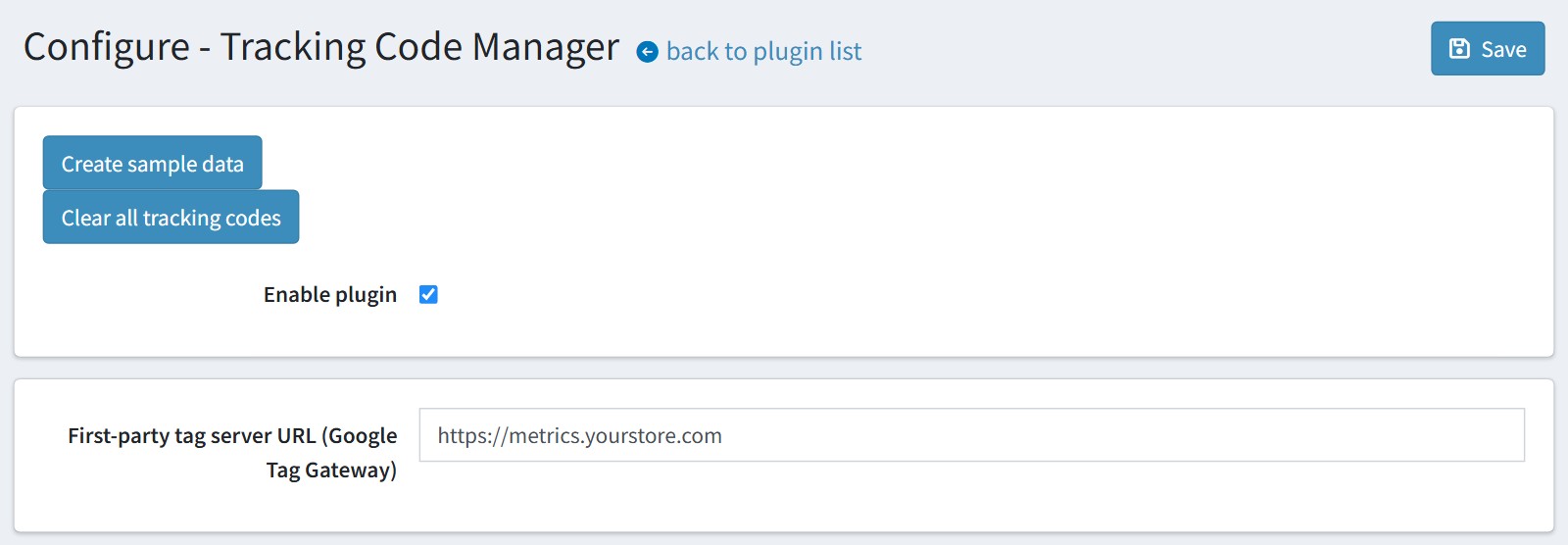
2. Open 'Configure' and enable 'Enable plugin'. When it is disabled, the plugin adds nothing to the pages.
'Create sample data' adds three unpublished examples: Facebook Pixel, Google Dynamic Remarketing and Google Tag Manager. 'Clear all tracking codes' deletes all tracking codes.
'First-party tag server URL (Google Tag Gateway)' is optional. Set up Google Tag Gateway with your CDN provider (Cloudflare, Akamai, Fastly, Stape) first, then enter its URL, ex. https://metrics.yourstore.com. All Google scripts will load from this domain instead of https://www.googletagmanager.com. Leave it empty to use the Google domain.
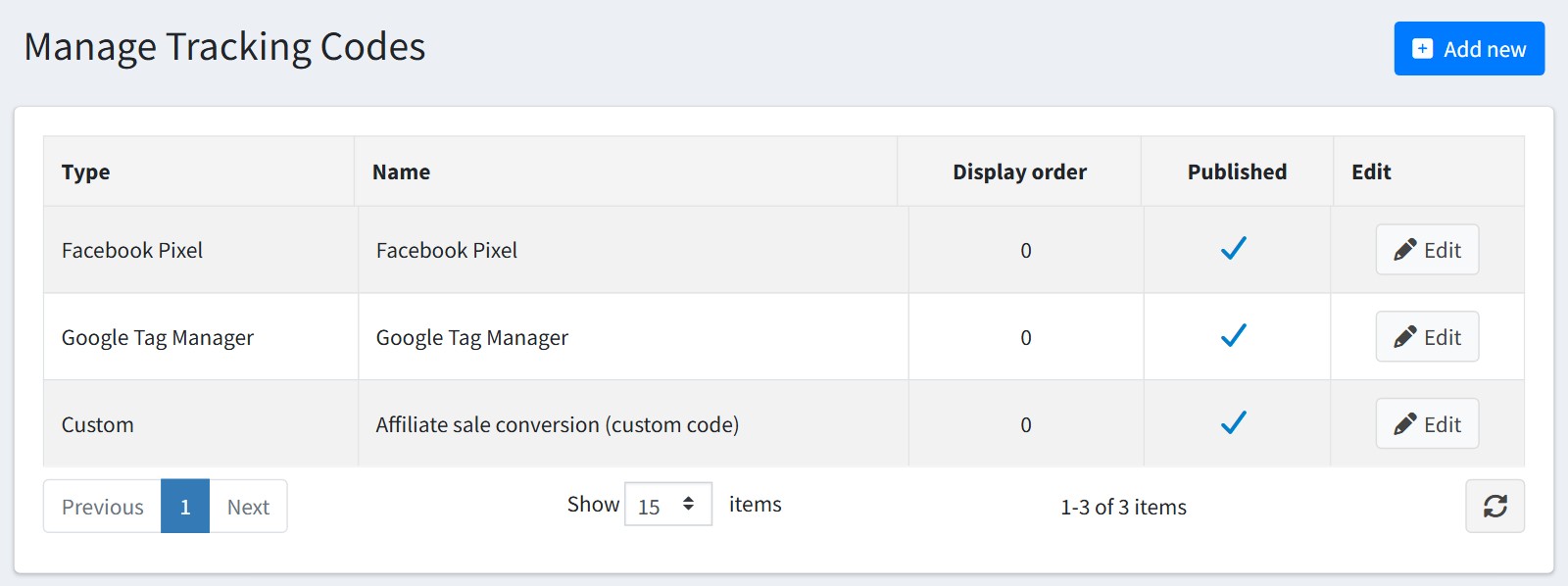
3. Open 'List'. Here you see all your tracking codes. A tracking code works only when it is published. Press 'Add new' to add a new one.
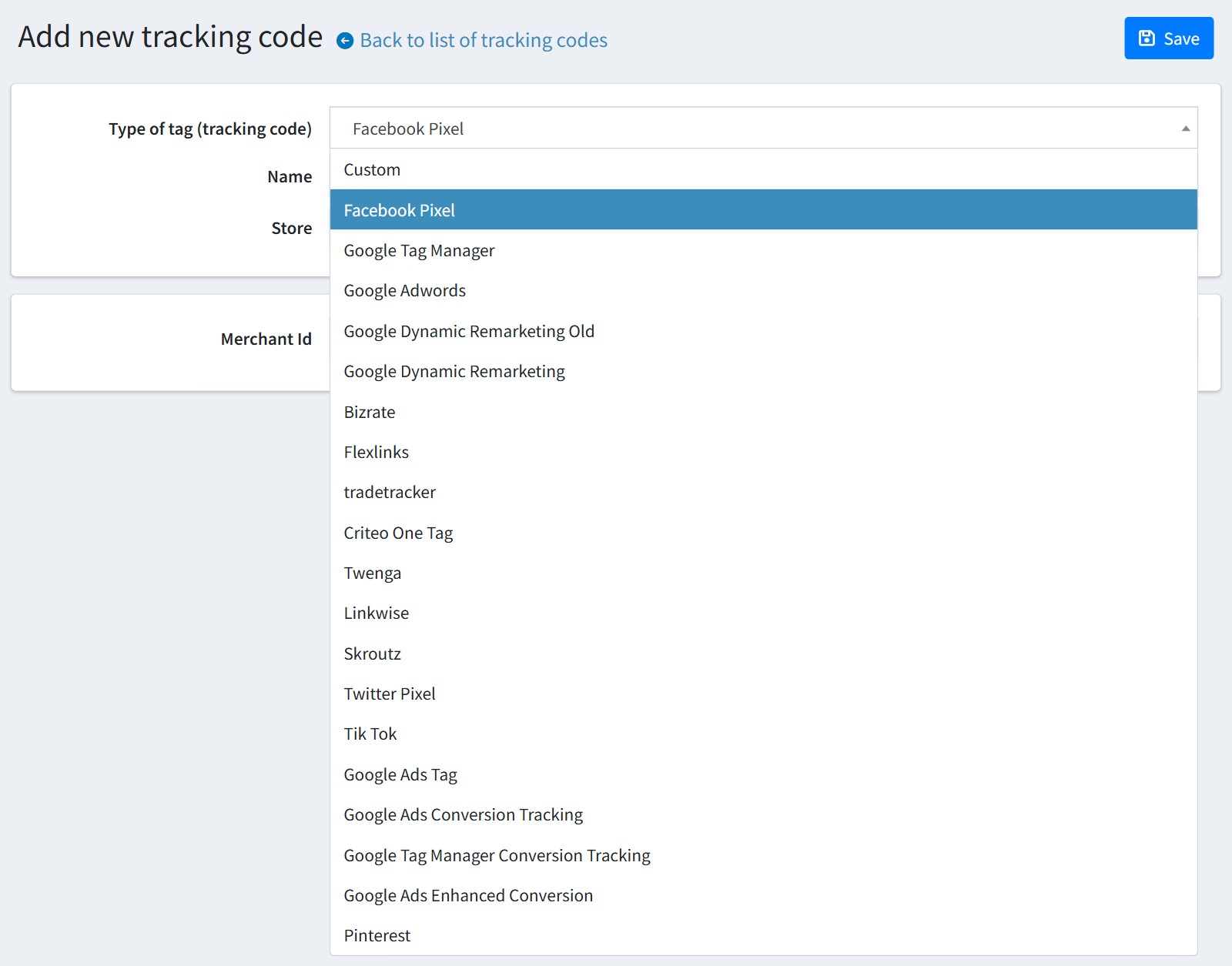
Select the service in 'Type of tag (tracking code)'. The plugin has ready-made templates for Facebook Pixel, Google Tag Manager, Google Ads, Google Dynamic Remarketing, Criteo, TikTok, Twitter, Pinterest, affiliate networks and price comparison sites. Select 'Custom' for any other script.
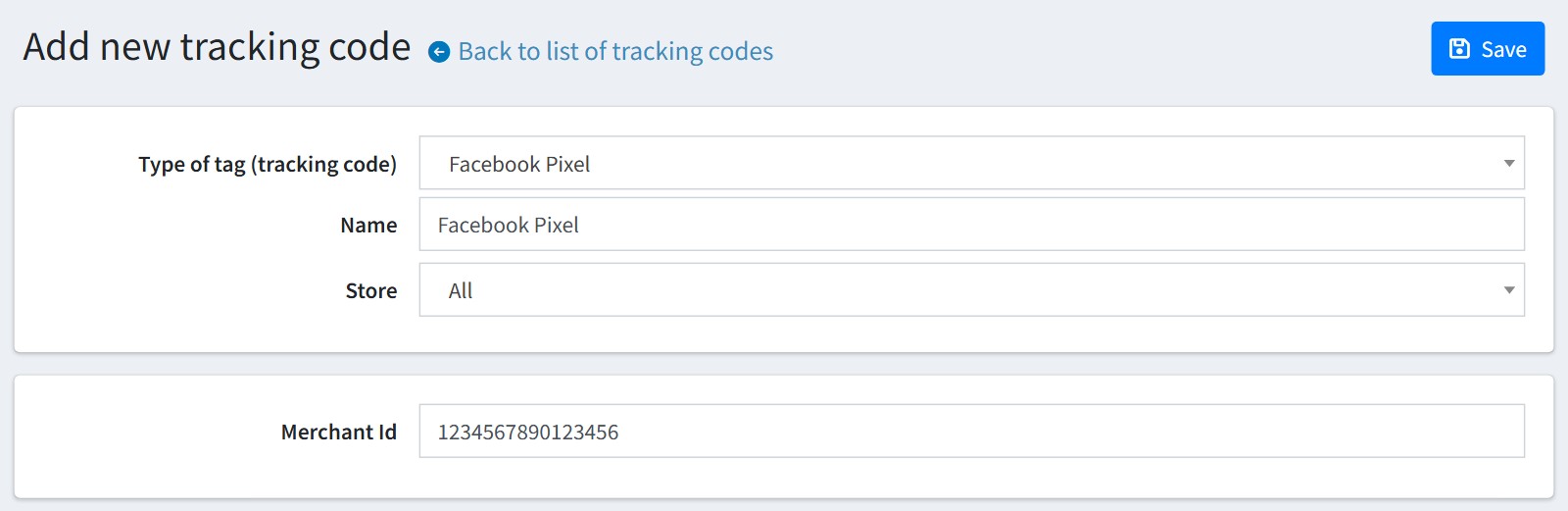
4. Facebook Pixel. Select 'Facebook Pixel', enter the name, select the store ('All' for all stores) and enter your pixel ID in 'Merchant Id'. Press 'Save'.
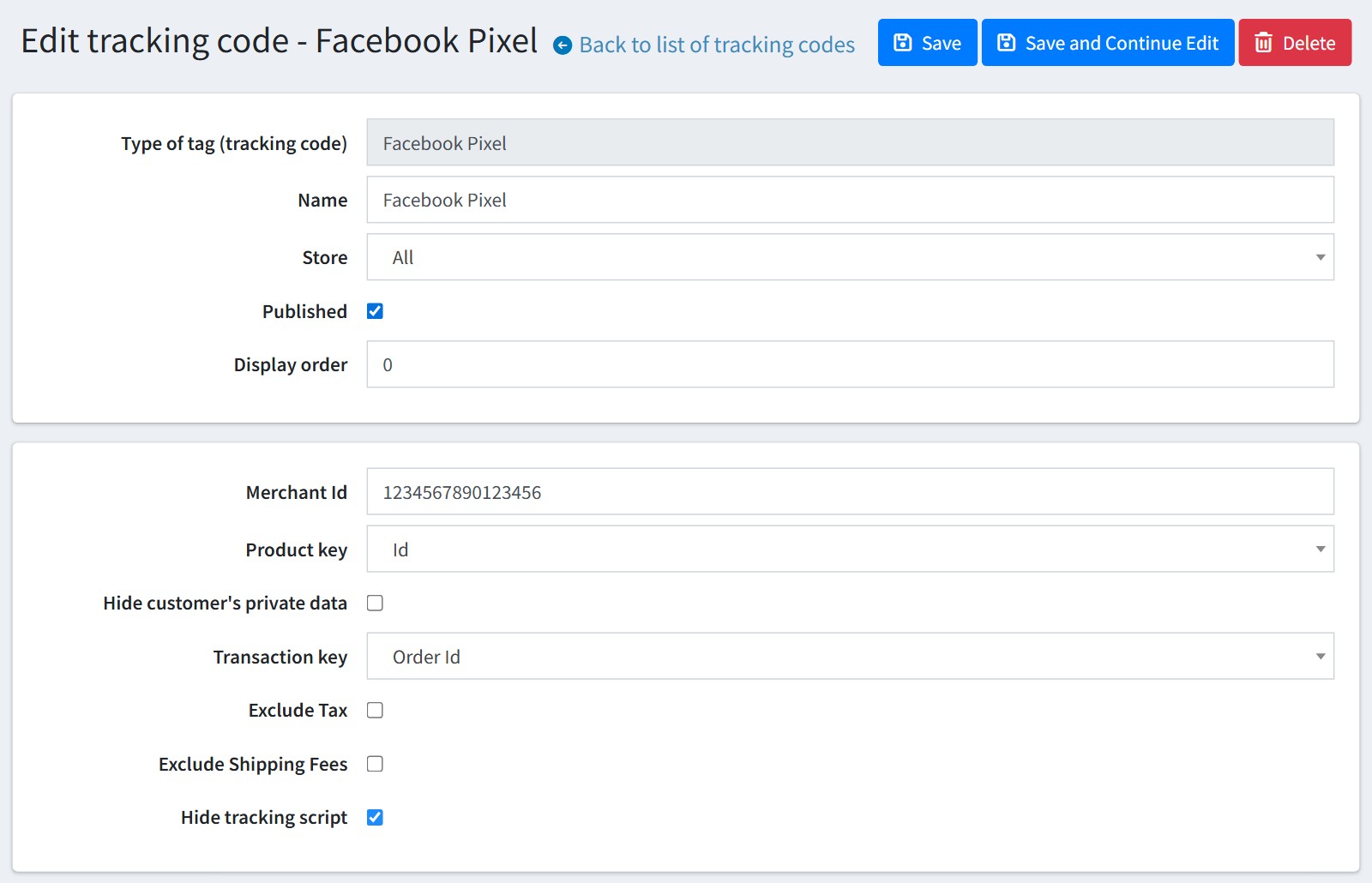
The Edit page opens. Enable 'Published' and press 'Save'.
'Product key' is the product value the plugin sends as the product ID: Id, Sku, Gtin or ManufacturerPartNumber. It must be the same ID as in your Facebook catalog, otherwise the events are not matched to your products.
'Hide customer's private data' - the plugin does not send the e-mail, name and other personal data of the customer.
'Transaction key' - the nop order ID or the order number is sent as the ID of the order.
'Exclude Tax' and 'Exclude Shipping Fees' - the order total is sent without tax, without shipping and payment fees.
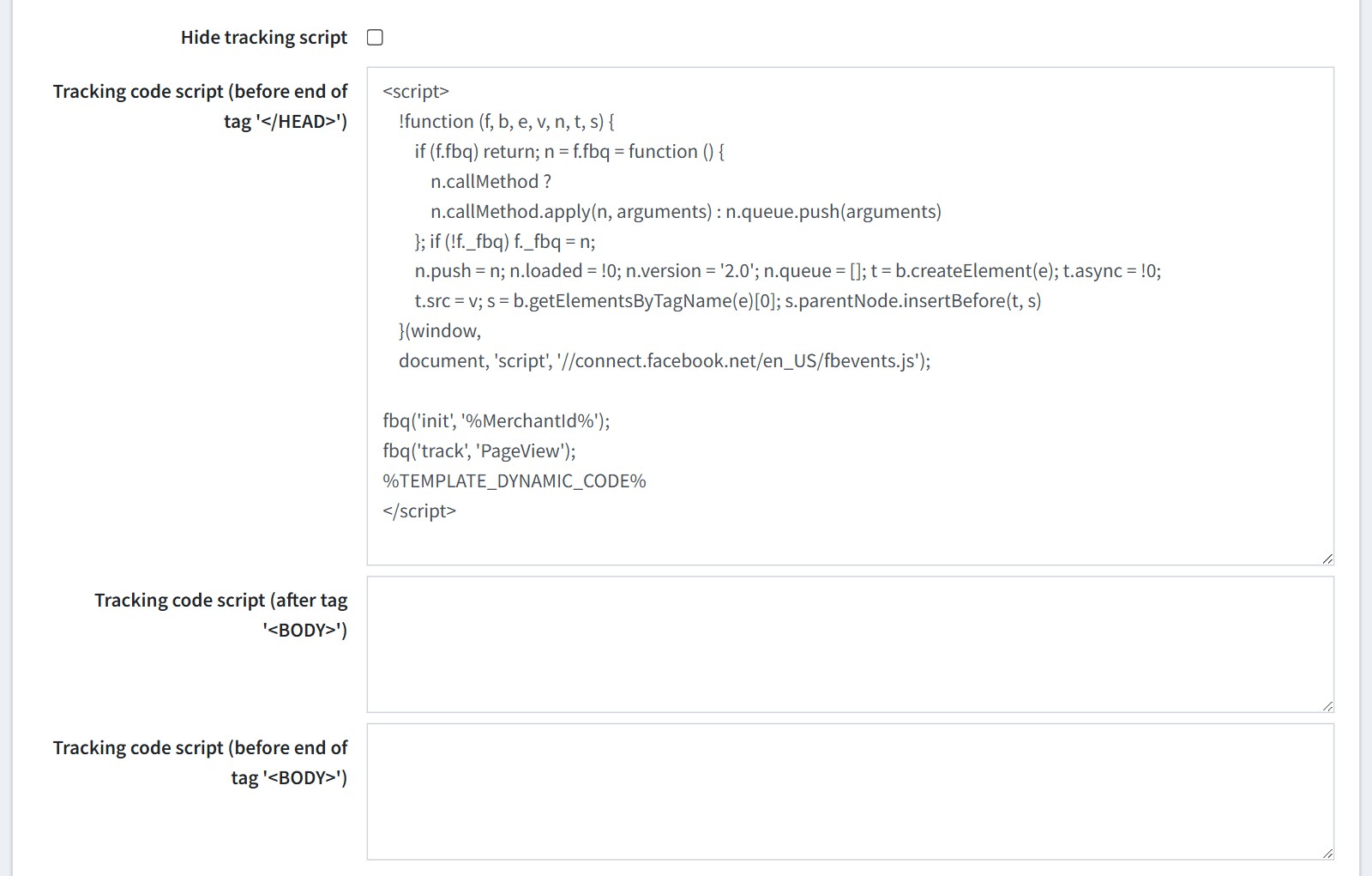
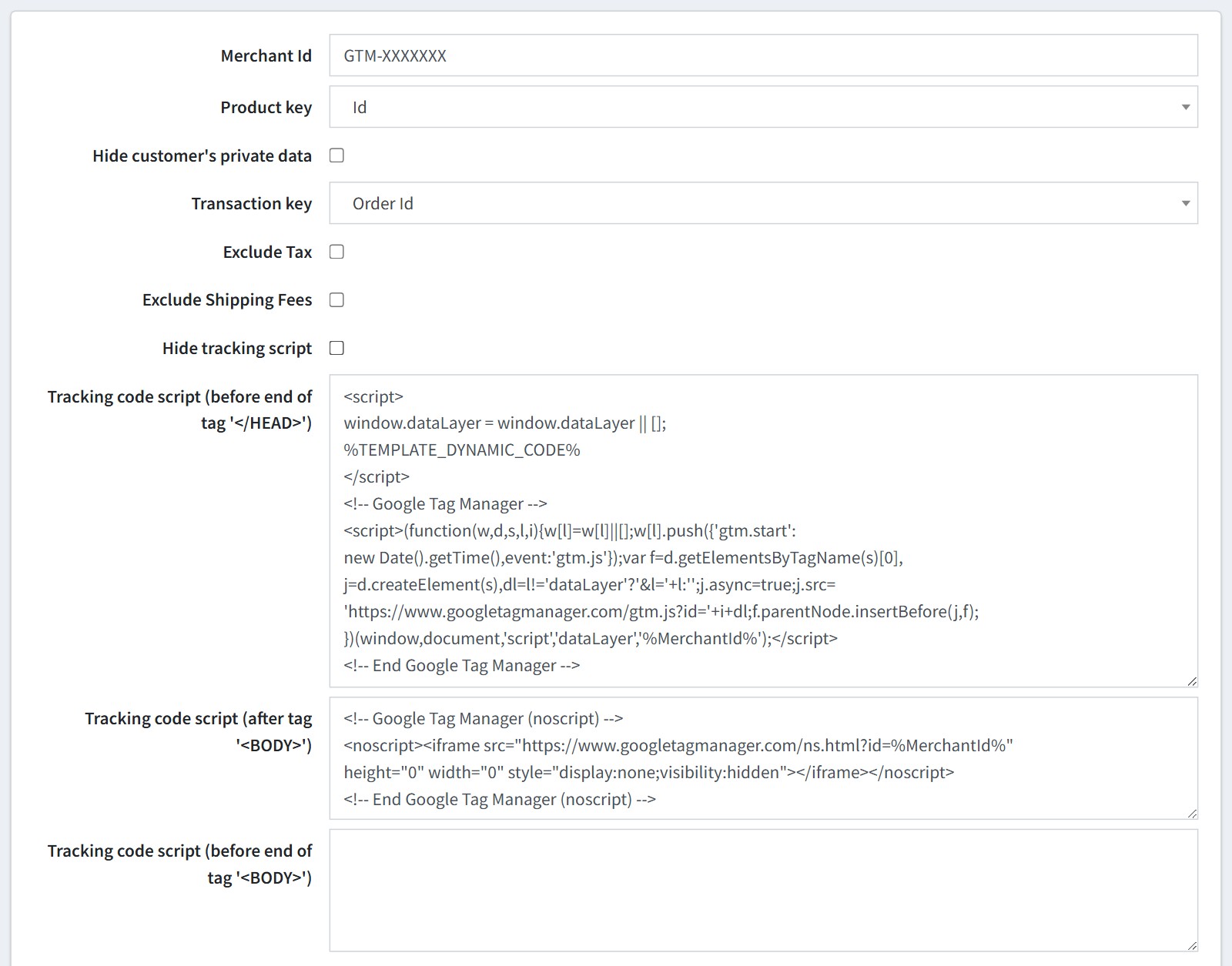
The plugin adds the pixel to all pages and sends the right event for each page: product, category, search, cart, wishlist, registration, checkout and order completed. You don't need to edit the script. Disable 'Hide tracking script' if you want to see it. The plugin puts the events of the current page in place of %TEMPLATE_DYNAMIC_CODE%.
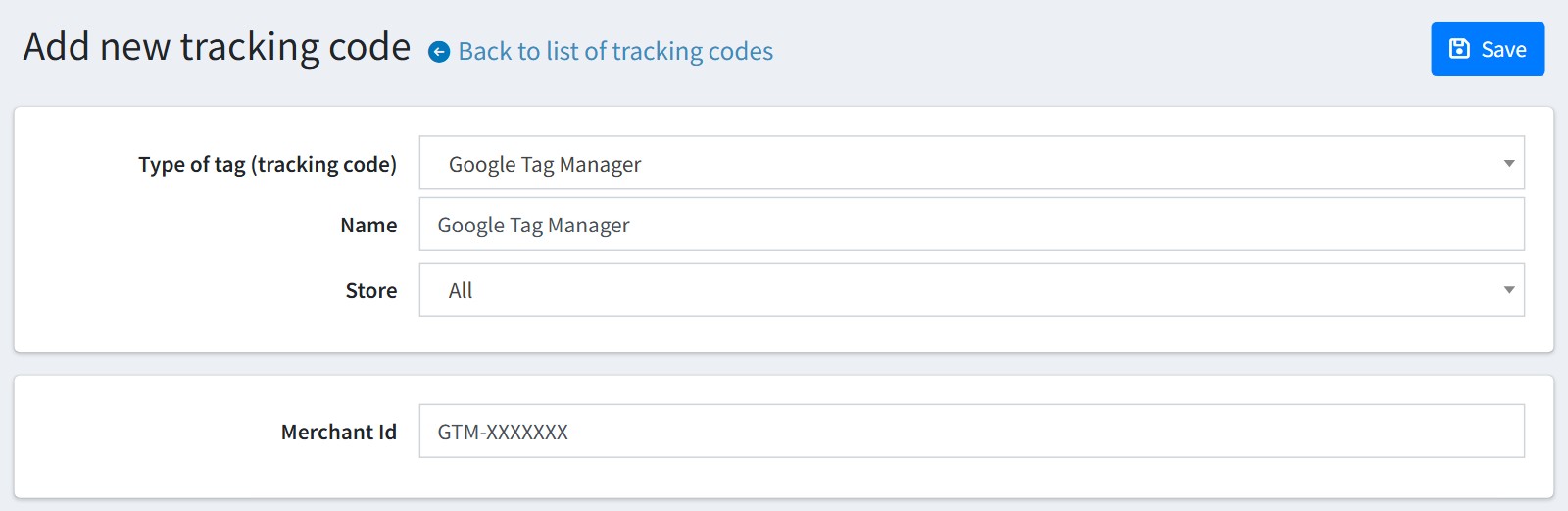
5. Google Tag Manager. Select 'Google Tag Manager', enter the name and your container ID (GTM-XXXXXXX) in 'Merchant Id'. Press 'Save'.
On the Edit page enable 'Published' and press 'Save'. The plugin adds the Google Tag Manager script before '</HEAD>' and the noscript iframe after '<BODY>'. It also pushes the page data to the dataLayer: 'PageType', the product IDs, the cart value and, on the 'Order completed' page, the order total, the currency and the products. Use them in the triggers and tags of your container.
If your theme or another plugin already adds the same container, remove it there. Otherwise all page views are counted twice.
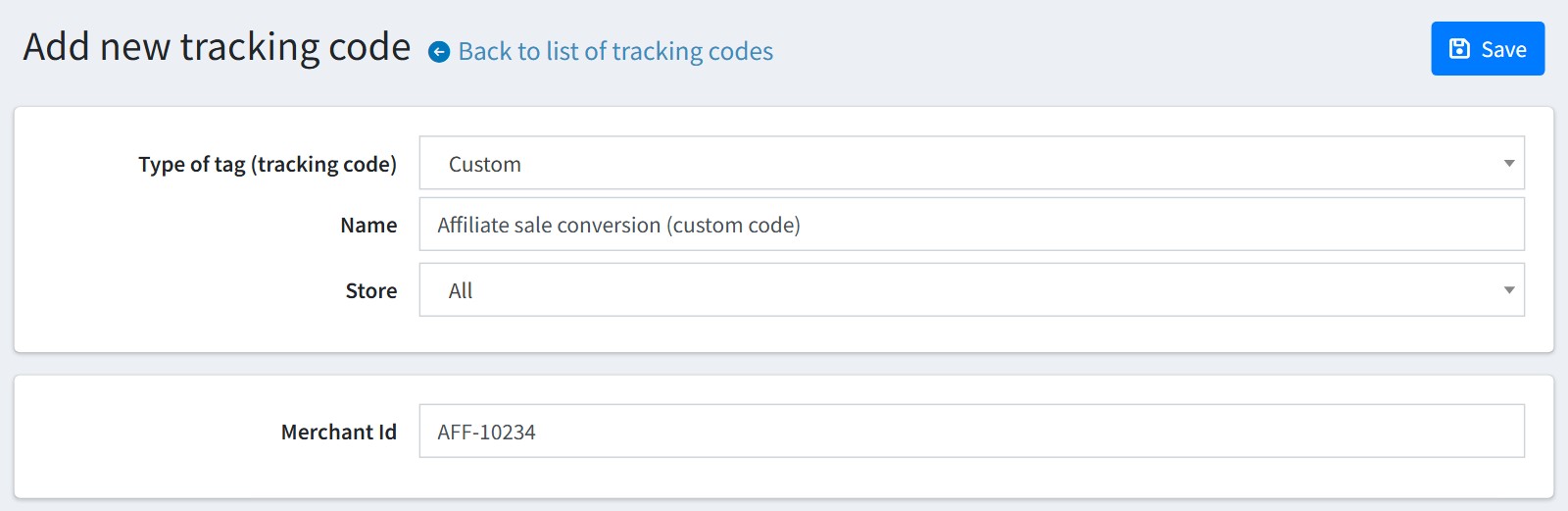
6. Your own script. Select 'Custom', enter the name and, if your service gives you an account ID, enter it in 'Merchant Id'. Press 'Save'.
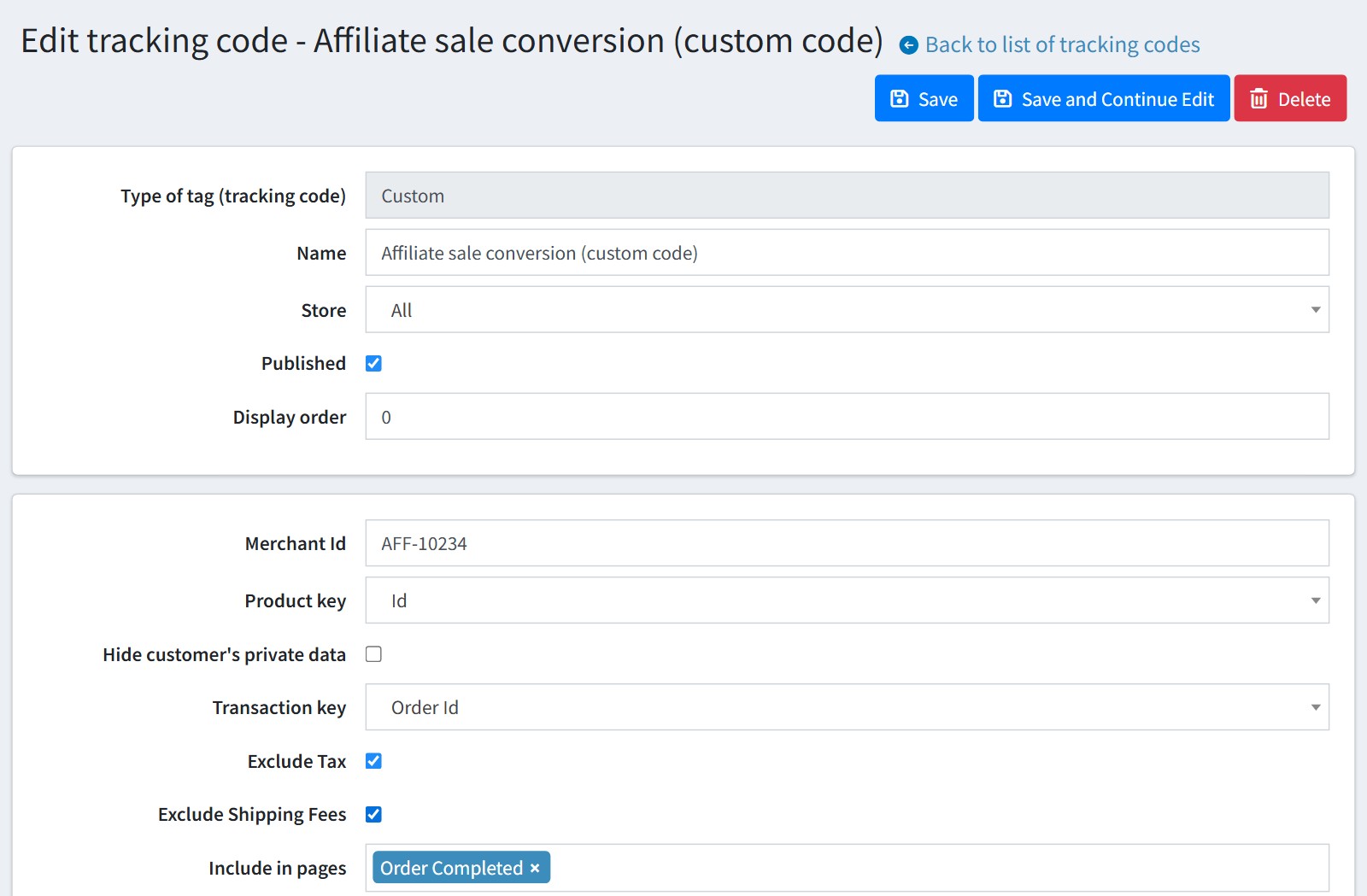
On the Edit page enable 'Published'. 'Custom' shows all settings. In this example an affiliate network gets its commission from the net amount, so 'Exclude Tax' and 'Exclude Shipping Fees' are enabled.
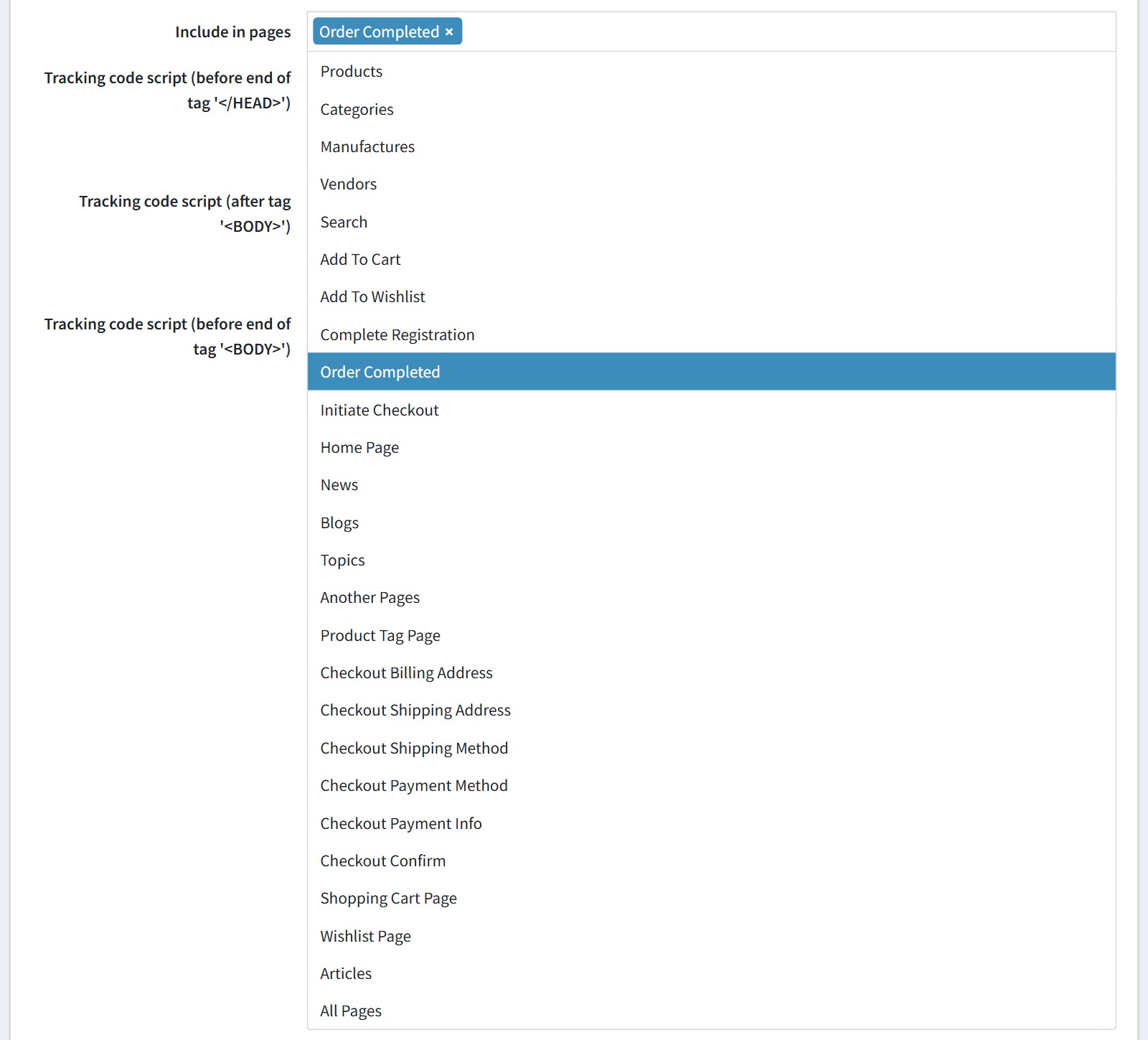
Select the pages in 'Include in pages'. Every checkout step is a page of its own. 'All Pages' adds the script to every page.
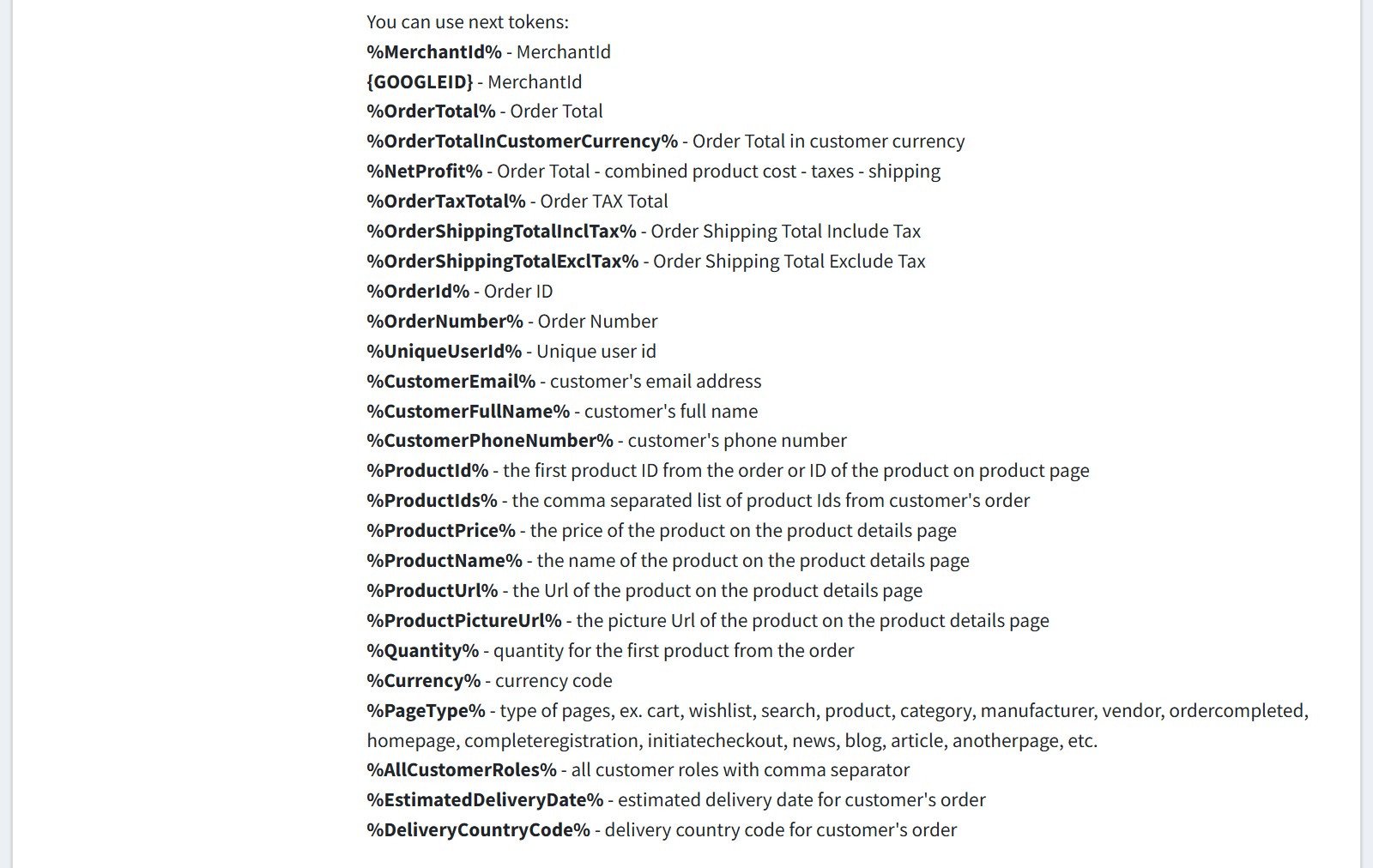
Paste your script into one of the three boxes: before '</HEAD>', after '<BODY>' or before '</BODY>'. Use the tokens and the plugin replaces them with the data of the page, the customer and the order. In this example the sale is sent to the affiliate network on the 'Order Completed' page.
'MVC Controller' and 'MVC Action' are for developers. Fill them in if the script must work only on one controller or action of nopCommerce.
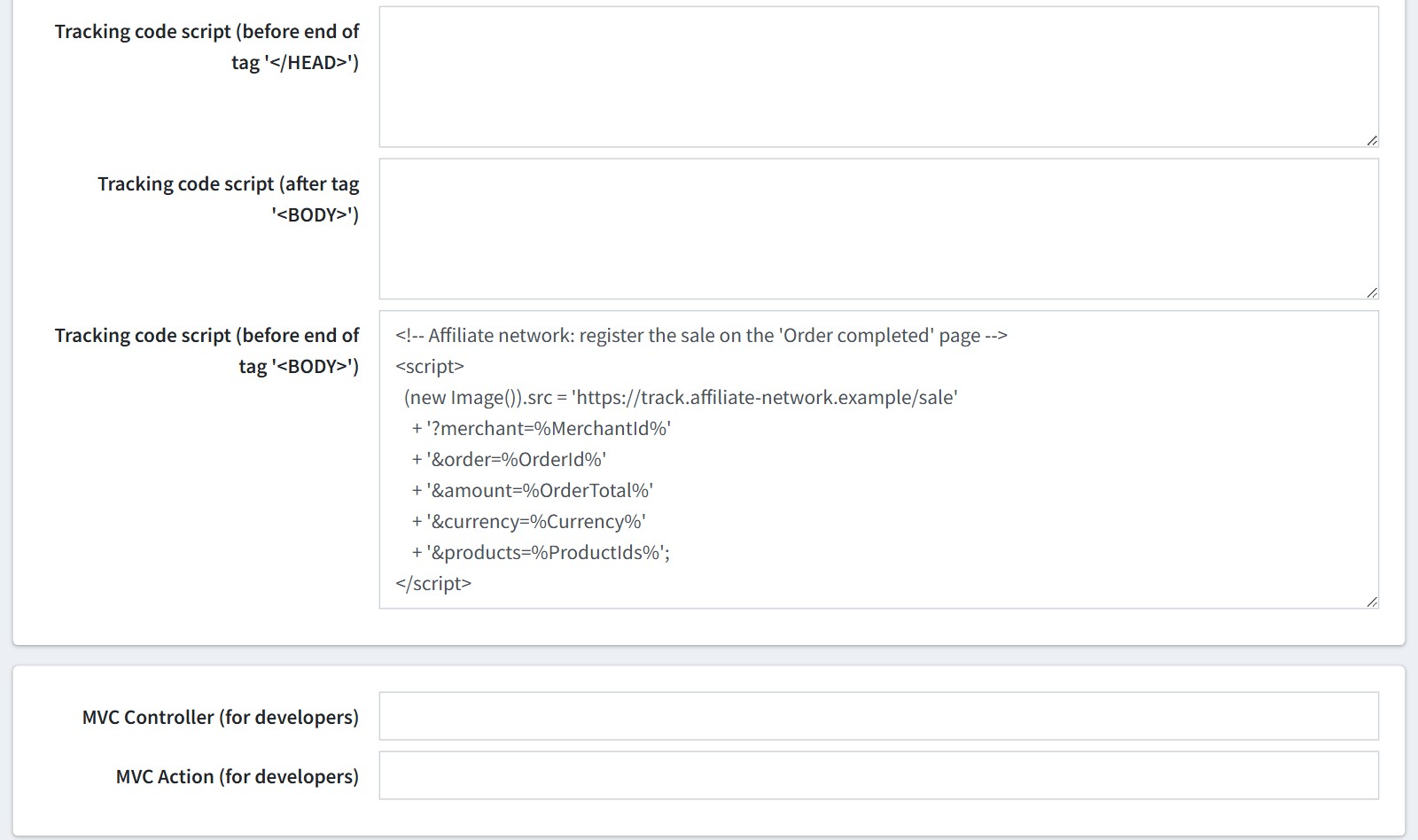
The list of tokens is below the script boxes. The tokens are case-sensitive: %OrderTotal% works, %ordertotal% does not.
7. Good to know.
The plugin sends each order only once. If the customer reloads the 'Order completed' page, the order is not counted again.
Each tracking code has its own 'Store'. Select 'All' or one store if you have several stores, and filter the list by store.
'Display order' sets the order of the scripts on the page.
The plugin uses the standard widget zones of nopCommerce. If your theme removed one of them, the script in that box is not shown.
The plugin does not show a cookie consent banner and does not wait for consent. Use the consent settings of your tag manager or a cookie consent plugin if you need it.